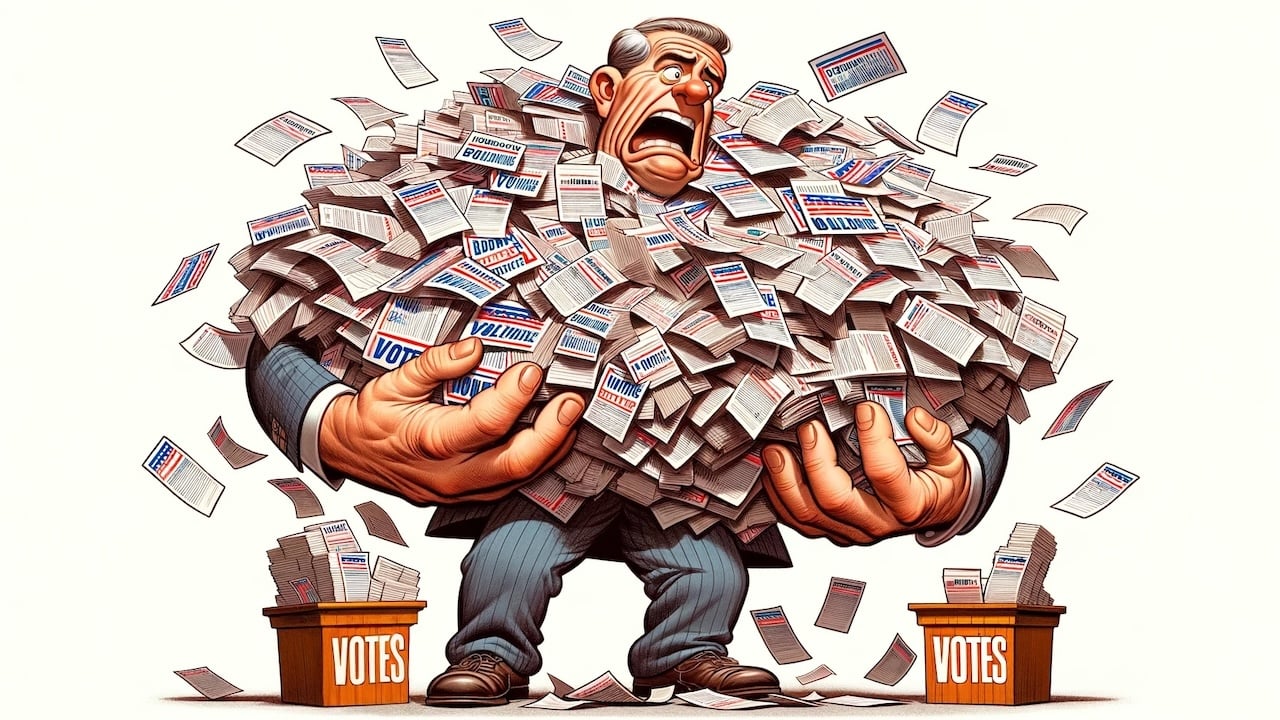
(Mike Maharrey, Money Metals News Service) Kamala Harris is going to fix price inflation. As she explains it, greedy corporations are arbitrarily raising prices and causing inflation. She will stop this “price gouging” and inflation will go away.
The problem with this plan is greedy corporations don’t cause price inflation. Greedy politicians do.
But Harris isn’t interested in fixing herself, so she will scapegoat the people who produce and distribute your food and empty shelves along the way.
Of course, if you look at it the right way, it’s a brilliant plan. You won’t pay as much for groceries because there won’t be anything on the shelves to buy.
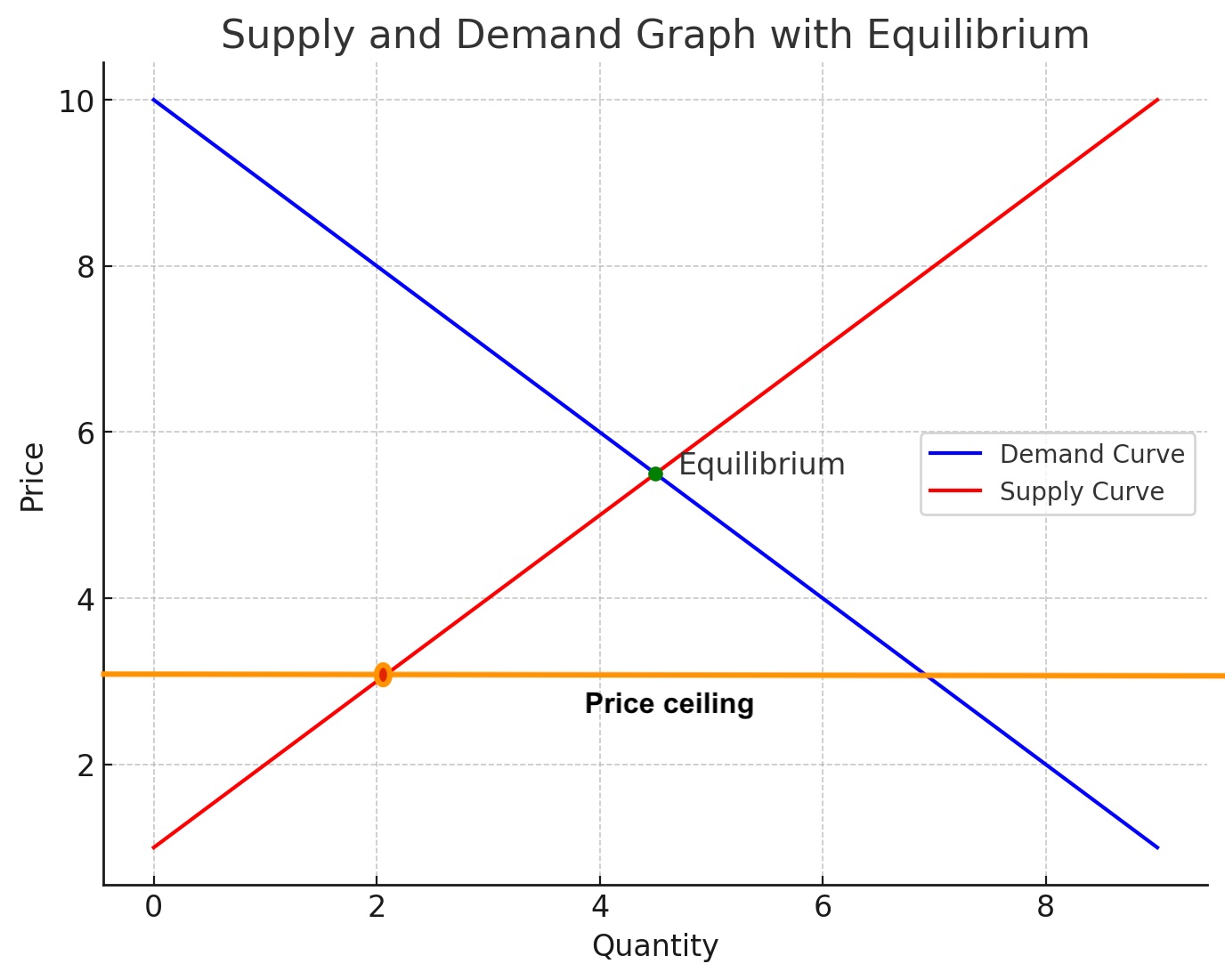
That’s what you get when government mandates price controls – shortages. And price controls are exactly what Kamala means when she says she’s going to stop “price gouging.”
This is basic economics. When you artificially hold the price of something lower than it otherwise would be, supply falls and demand increases. This causes shortages.
And it’s not like this is some untried theory. President Richard Nixon imposed price controls in the 1970s. Guess what. There were shortages!
Those of you who are old enough will remember the gas lines in the early 1970s.
Even the government admits this. In 1973, a Senate report concluded that price controls caused a breakdown in energy production and distribution and the shortages were “far more extensive than anticipated.”
Robert Bradley Jr at the Institute for Energy Research explained exactly what happened.
“Frozen prices did not address the underlying cause of expansionary monetary policy. Nor did it override the market’s continually changing scarcity values. With demand artificially encouraged and supply discouraged, strife with an everyday, essential commodity resulted.”
You’ll notice I highlighted “expansionary monetary policy.” Keep that in mind. I’ll get to it in a moment.
The problems weren’t limited to the energy sector. As Mises Institute Ryan McMaken explained, there were also food shortages.
“Price controls on food led to predictably disastrous results. Under Nixon’s price controls, farmers couldn’t sell chicken products at prices high enough to justify the cost of feeding the chickens. In the early 1970s, farmers killed over a million baby chicks. Similar problems occurred in the beef and pork industries with farmers sending pregnant sows to the slaughterhouse while dairy cows were butchered.”
The problem with the Harris plan – besides basic economics – is that it doesn’t address the cause of price inflation. It has nothing to do with “greedy corporations.”
Greedy government causes price inflation.
Remember what Bradley said about “expansionary monetary policy?”
That’s the root of the inflation problem.
Politicians want to spend more and more money so that can give you things. They know that if they give you enough stuff, you’ll vote for them. The problem is government doesn’t have any money of its own. It has to take money from you before it can spend it. People get upset when the government takes money from them, so they have to do it in a stealthy manner.
Enter the inflation tax.
Governments and central banks create money out of thin air to sustain their borrowing and spending. That, my friends, is inflation.
Economist Milton Friedman hit the nail on the head –
“Inflation is always and everywhere a monetary phenomenon.”
There’s something you will never hear on CNBC or from a White House spokesperson.
A big part of the problem is that the powers that be managed to redefine inflation so it obscures the government’s culpability.
When government officials and pundits on TV talk about “inflation,” they almost always mean price inflation — rising prices. But historically, inflation didn’t mean “rising prices.” Inflation was defined more precisely as an increase in the amount of money and credit in the economy, or more succinctly, an expansion in the money supply.
Rising prices are one of the symptoms of monetary inflation. If you have more dollars chasing the same amount of goods and services, you will see a general rise in prices. Monetary inflation causes price inflation. They are two different things.
Do you see the sleight of hand?
Over the years, government officials, along with their apologists in the mainstream financial media and academia, intentionally shifted the definition of inflation to suit government purposes. The standard definition of inflation you hear during White House press conferences or a CNBC roundtable is basically just government propaganda that keeps you from realizing that it’s all the government and central bank’s fault.
Economist Ludwig von Mises explained it this way:
“People today use the term `inflation’ to refer to the phenomenon that is an inevitable consequence of inflation, that is the tendency of all prices and wage rates to rise.
“The result of this deplorable confusion is that there is no term left to signify the cause of this rise in prices and wages. There is no longer any word available to signify the phenomenon that has been, up to now, called inflation… As you cannot talk about something that has no name, you cannot fight it.
“Those who pretend to fight inflation are in fact only fighting what is the inevitable consequence of inflation, rising prices. Their ventures are doomed to failure because they do not attack the root of the evil. They try to keep prices low while firmly committed to a policy of increasing the quantity of money that must necessarily make them soar.
“As long as this terminological confusion is not entirely wiped out, there cannot be any question of stopping inflation.”
Since most people think inflation just means prices are going up, they believe all kinds of things cause it, from corporate greed to Putin’s price hikes.
This lets the real culprit off the hook.
And it makes dumb ideas such as Kamala price controls sound like a plausible solution.
Now, you might be tempted to think Harris is just economically illiterate, but I don’t think that’s the case. I think she knows price controls are a horrible idea, but she doesn’t care, because she also knows that it will play well with voters.
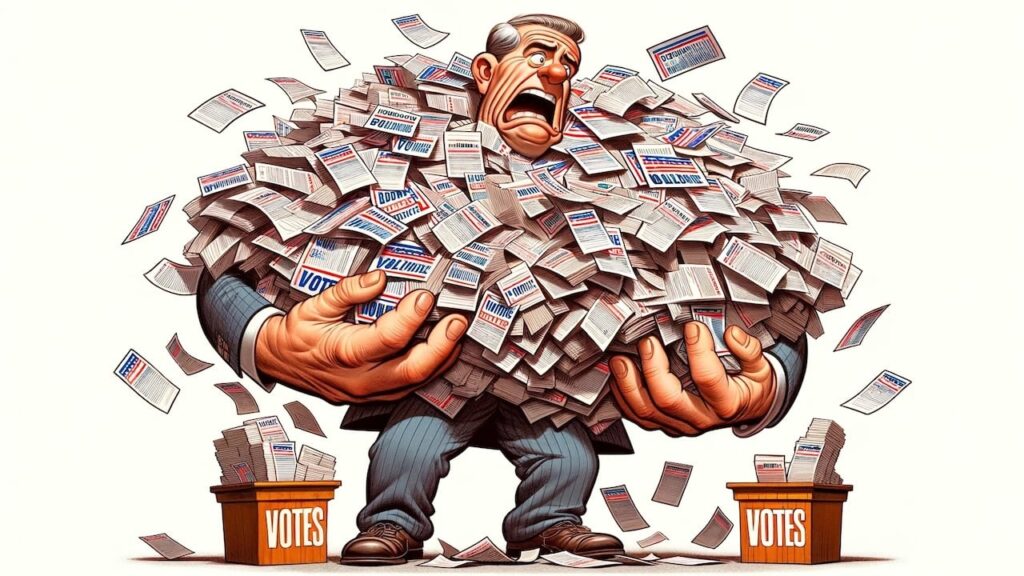
Harris is a greedy politician. She wants lots of votes. This is a way to get them.
Yes, basic economics tells us price controls would be a disaster. But most people don’t know basic economics. They only know about their feelings. Their feelings tell them big corporations are bad, and that their favorite politicians care about them. So, when Harris says the big bad corporations are causing prices to go up, it sounds plausible. And it makes them feel good that she’s going to help.
McMaken came to the same conclusion –
“At this point, it is beyond naive to think that the Harris campaign is only pushing for price controls because Harris and her advisors have ‘good intentions,’ but are “economically illiterate” and just don’t understand the ‘unintended consequences’ of this policy. It is absurd in the year 2024 to think that no one in the White House or Harris campaign is aware of the effects of price controls. They know. They just don’t care. Price controls are a political policy. The impoverishing economic effects are just ‘collateral damage’ that are an easy price to pay for the ruling class that will have no problem paying its grocery bills. It is likely that Nixon knew what would happen also, and he didn’t care. What mattered was the 1972 election.”
And that’s what matters to Harris. She doesn’t care that you have a high grocery bill. She doesn’t care that her plan would make things infinitely worse. All she cares about is getting enough votes to win the election.
Mike Maharrey is a journalist and market analyst for MoneyMetals.com with over a decade of experience in precious metals. He holds a BS in accounting from the University of Kentucky and a BA in journalism from the University of South Florida.