
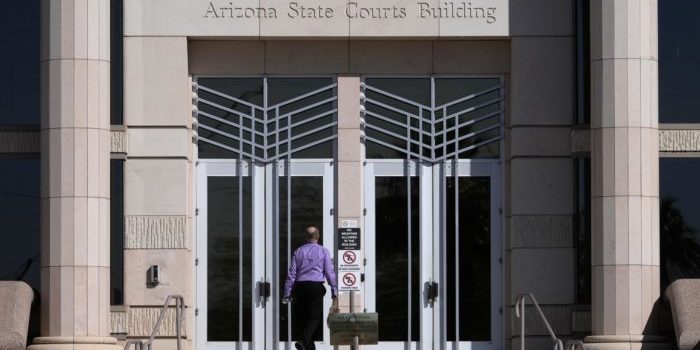
(Headline USA) As Arizona voters prepare to decide in the fall whether to enshrine abortion as a right in the state constitution, a pro-life informational pamphlet can refer to an embryo or fetus as an “unborn human being,” the state’s highest court ruled Wednesday.
The Arizona Supreme Court justices sided with Republican lawmakers, who drafted the language sent to all voters in the state, over protests from pro-abortion activists and Democrat officials.
The ruling comes as abortion foes have long worked to give pre-born children the same legal and constitutional protections as the mothers carrying them. It was highlighted recently when the Alabama Supreme Court ruled that frozen embryos are legally protected children, forcing lawmakers to scramble to enact protections for in vitro fertilization.
Democrats have made abortion a central message since the U.S. Supreme Court overturned Roe v. Wade in 2022, and it is a key part of their efforts in this year’s elections. They hope the ballot measure in Arizona, one of a handful of battleground states that will determine which party controls the presidency and the U.S. Senate, will drive sympathetic voters to cast a ballot.
The ruling drew swift criticism from the ballot measure’s backers, who argued the phrase “unborn human being” is neither impartial nor objective. They said they were concerned that Arizonans would be subjected to biased and politically charged words.
“We are deeply disappointed in this ruling, but will not be deterred from doing everything in our power to communicate to voters the truth of the Arizona Abortion Access Act and why it’s critical to vote YES to restore and protect access to abortion care this fall,” the abortion supporting organization, Arizona for Abortion Access, said in a statement.
The ballot measure would allow abortions until an embryo or fetus could survive outside the womb, typically around 24 weeks, with exceptions allowing later-term abortions to save the mother’s life or to protect her physical or mental health. It would restrict the state from adopting or enforcing any law that would prohibit the procedure.
Arizona House Speaker Ben Toma, a Republican who co-chairs the legislative council, the panel that drafted the disputed language, said it’s intended to help voters understand the current law.
“The Arizona Supreme Court’s ruling is correct,” Toma said.
Arizona for Abortion Access sued the majority-Republican legislative council for including what the group called politicized language. The Superior Court agreed, finding that the GOP-favored language was “packed with emotion and partisan meaning.” That ruling was overturned by the Supreme Court, whose seven justices were appointed by Republican governors.
The brief ruling, signed by Vice Chief Justice John Lopez, did not explain the justices’ rationale, saying a full opinion would be released later. Justice Clint Bolick, whose wife is a Republican lawmaker on the legislative council, recused himself from the case.
The language describing an embryo or fetus as an “unborn human being” will go in a pamphlet that gives voters information on candidates and ballot measures to help inform their choices. The secretary of state’s office, which determines what gets printed on the ballot itself, said “unborn human being” would not appear there.
The secretary of state’s office said Monday that it had certified 577,971 signatures, far above the number required to put the question before voters.
As pro-life groups and Republican allies reel from a string of defeats at the ballot box, many have used an array of strategies to keep abortion off the ballot, including through monthslong legal battles over ballot initiative language.
In Missouri, for example, Republican Attorney General Andrew Bailey stonewalled the pro-abortion campaign for months before the secretary of state, Republican Jay Ashcroft, tried to describe the proposal to voters as allowing “dangerous and unregulated abortions until live birth.” A state appeals court last year ruled that Ashcroft’s wording was politically partisan and tossed it out. In Florida, language was at the center of attempts by the state’s Republican attorney general to keep a proposed abortion amendment off the ballot. Many of these strategies build off of those seen last year in Ohio, where voters overwhelmingly passed a state constitutional amendment protecting abortion.
Other efforts to thwart abortion ballot measure efforts have included attempts to remove signatures from petitions, legislative pushes for competing ballot measures that could confuse voters, and attempts to raise the thresholds for ballot initiatives or ban residents from placing abortion initiatives on the statewide ballot altogether.
Adapted from reporting by the Associated Press